Guide
Dacor Self-Cleaning Oven: Safe Use and Door-Lock Fixes
How a Dacor self-cleaning oven works, how to run the 2 to 4 hour cycle safely, why the door can stay locked, and what to check before calling for repair.
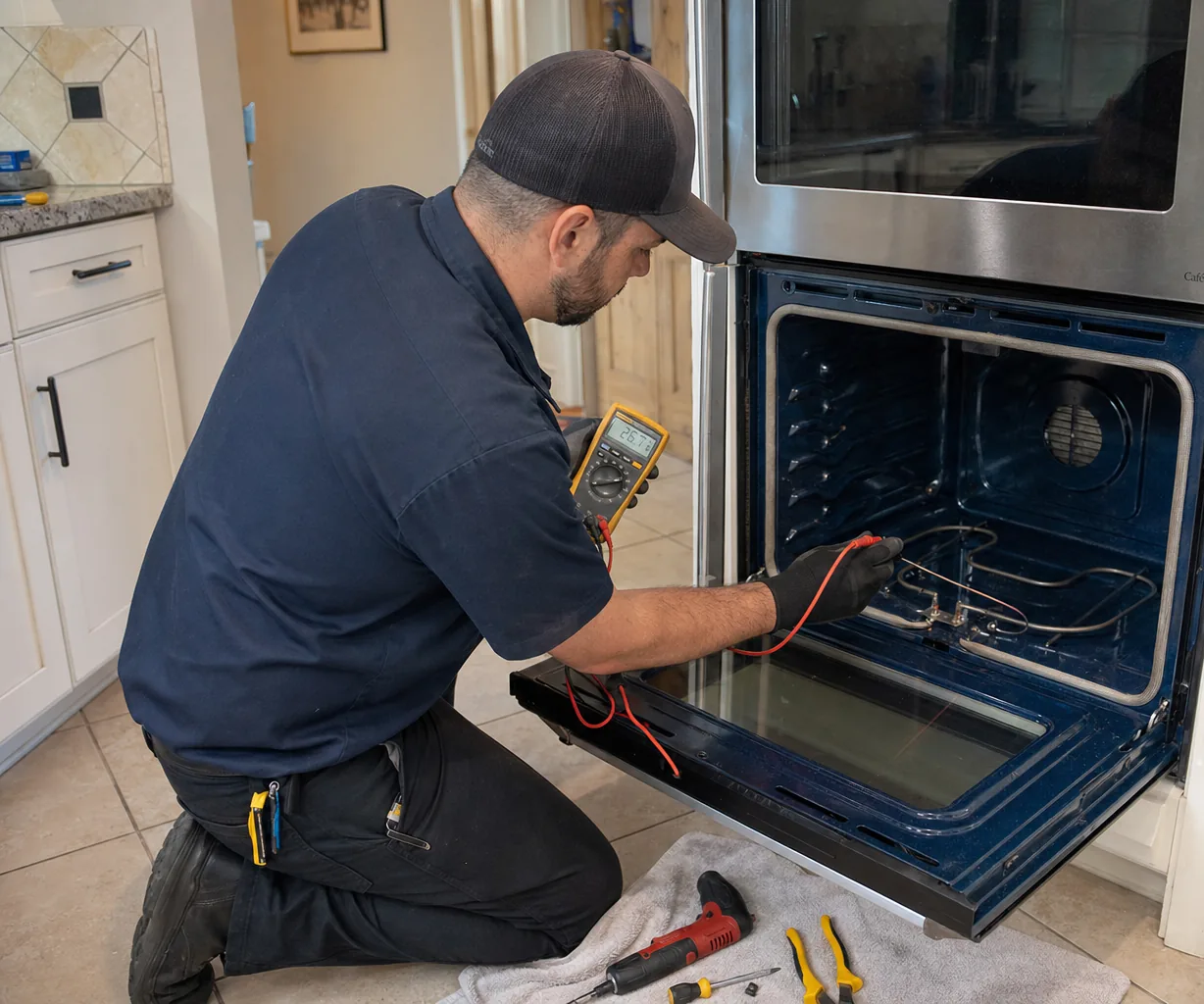
A Dacor self-cleaning oven cleans itself by locking the door and heating the empty cavity to roughly 800–900°F for about 2 to 4 hours, which burns grease and spills down to a fine gray ash. To use it safely, empty the oven, choose a cycle length that matches the mess, stay home while it runs, and let it cool completely before you wipe out the ash.
If something has already gone wrong, Weston Viking Appliance Repair is an independent service, not manufacturer-authorized, that repairs Dacor wall ovens and ranges. Call (475) 242-8522.
How does the Dacor self-clean cycle work?
Self-clean is pyrolytic cleaning: heat does the work, not chemicals. When the cycle starts, a motorized latch locks the door and the heating system pushes the cavity far past any cooking temperature. A temperature sensor reports to the control board, which holds the heat for the set time, while a cooling fan protects the electronics and the surrounding cabinetry.
The door stays locked through the cycle and the cool-down, which commonly adds 30 to 90 minutes after the timer ends. Many Dacor controls offer a shorter cycle for light soil, so there is no need to run the longest setting every time. A few cycles a year is plenty for most kitchens.
How do you run a self-clean cycle safely?
Follow these 7 steps every time:
- Empty the oven. Remove the racks (including telescoping racks), broil pan, meat probe, cookware, foil and any thermometer, unless your use-and-care manual says the racks are self-clean safe.
- Scrape off big spills. A thick puddle of fat or burnt sugar can smoke heavily or flare.
- Wipe the door frame by hand. The area outside the gasket doesn’t clean itself. Don’t scrub or pull the gasket.
- Skip the chemicals. Never use commercial oven cleaner or foil liners in a self-cleaning oven.
- Ventilate. Run the range hood or open a window; new ovens smell during their first few cycles.
- Protect pets. Move pet birds well away, because self-clean fumes can be fatal to birds.
- Stay home. Keep children away from the hot door glass, and don’t run the cycle on the morning of a big meal.
Why does self-clean fail or leave the door locked?
Hours at peak heat stress the latch, sensor, safety fuses and control board, so a cycle is often when a weak part finally gives out.
| Symptom | Likely cause | What you can check |
|---|---|---|
| Door stays locked long after the cycle | Latch motor, lock switch, or a control that can’t read the temperature | Wait 2 hours, then switch off the breaker for 5 minutes and restore power |
| Oven won’t heat after self-clean | Blown thermal fuse or tripped high-limit safety | If the display works but nothing heats, call for repair |
| Display is blank | Tripped breaker, thermal fuse or control board | Reset the breaker once; don’t keep cycling power |
| Cycle stops early with an error code | Temperature sensor, door-lock fault or overheating | Write down the code |
| Heavy smoke or flame inside | Grease spill left in the oven | Turn the oven off and keep the door shut; call 911 if fire escapes |
Never pry a locked door. Forcing the latch can bend the hook or break the lock and turn a simple reset into a bigger repair.
Weston’s heavily wooded roads make storm power outages a familiar event. If the power drops mid-cycle, the latch usually stays locked until power returns and the control reads a cool cavity. Give it a couple of hours, then cycle the breaker once if it still won’t open.
What should you do after the cycle finishes?
Wait until the lock light goes out and the door opens normally. Then:
- Wipe the ash out with a damp cloth. White spots that won’t wipe away are usually harmless mineral residue from spills.
- Put the racks back and make sure they slide smoothly.
- Run a test bake at 350°F for 15 minutes to confirm the oven heats before you depend on it.
If the oven fails that test bake, or the display acts strangely, stop using it and have it checked.
When is it time to call for repair?
Call when the door stays locked after a breaker reset, the oven won’t heat, the display stays blank, or an error code keeps returning. Typical ranges: a diagnostic visit runs $95–$149, most range and oven repairs fall within $250–$900, and an oven igniter or bake element replacement typically runs $250–$500. The firm quote is given on site after diagnosis, and the service call is credited toward the repair.
See oven repair, the double wall oven page, and repair pricing for details. We serve Weston Center, Georgetown, Lyons Plains, Westport, Wilton, Redding and Easton.
Frequently asked questions
How long does a Dacor self-clean cycle take?
Most cycles run about 2 to 4 hours, plus 30 to 90 minutes of cool-down before the door unlocks. Plan on the oven being out of use for most of an afternoon.
Can I leave the racks in during self-clean?
Only if your use-and-care manual says they are self-clean safe. Standard chrome and telescoping racks should come out, because the heat discolors them and dries out the slides.
Should I self-clean right before a holiday meal?
No, run it at least a week ahead. If a part fails during the cycle, you still have time to get the oven repaired.
Why does my oven smell during self-clean?
Burning food soil always smells, and new ovens burn off manufacturing residue during their first few cycles. A sharp burning-plastic smell means something was left inside or a part is overheating, so turn the oven off.